


What is Artificial Intelligence(AI), it refers back to the capability of machines and laptop systems to carry out obligations that generally require human intelligence. This consists of competencies like learning, reasoning, hassle-fixing, know how language, and even creativity.
What is Artificial Intelligence of key aspects:
- Gadget getting to know: A subset of AI in which structures research from records to improve their overall performance over time without being explicitly programmed. Deep gaining knowledge of: A more advanced form of gadget studying that uses neural networks to investigate complex facts patterns.
- Packages: AI is utilized in various fields, such as healthcare (for analysis), finance (for fraud detection), and even in regular technology like virtual assistants and advice structures.
- AI is unexpectedly evolving, with current advancements focusing on generative AI, that can create new content material like text and photographs.AI works by using the usage of algorithms and huge datasets to imitate human-like intelligence.
How does AI Works?
1. Facts collection
AI structures start with full-size quantities of information, which can encompass textual content, snap shots, or other forms of facts. This records is crucial for education the AI.
2. Algorithms
AI employs diverse algorithms, mainly in gadget mastering and deep getting to know, to research the records. these algorithms assist the AI discover styles and make predictions based on the input facts.

3. Training
Throughout the schooling phase, the AI learns from the facts through adjusting its algorithms to improve accuracy. This includes strolling several iterations wherein the AI tests its predictions in opposition to actual results and refines its method.
4. Inference
As soon as skilled, the AI could make selections or predictions primarily based on new statistics. this is known as inference, where the AI applies what it has discovered to clear up actual-international issues.
5. Comments Loop
AI systems frequently contain comments mechanisms, letting them analyse continuously. this indicates they can adapt and enhance over the years as they come across new records.
6. Packages
AI is used in numerous fields, from virtual assistants like Siri and Alexa to recommendation structures on systems like Netflix and Amazon.
What are the different types of AI?
AI can be categorised into several types based on abilities and functionalities. here’s a breakdown:
1. Based on abilities
- Artificial Narrow Intelligence (ANI): additionally called susceptible AI, this type makes a speciality of a specific task (e.g., voice assistants like Siri).
- Artificial General Intelligence (AGI): This theoretical AI could carry out any highbrow challenge that a human can do, adapting to new situations with out human interventions
- Artificial Superintelligence (ASI): some other theoretical concept, ASI would surpass human intelligence and abilities in all factors.


2. Based on functionality
- Reactive Machines: these AI structures can most effective react to current situations and do not have memory (e.g., IBM’s Deep Blue).
- restrained reminiscence: those systems can use beyond reports to tell future selections (e.g., self-riding vehicles).
- idea of mind: that is nevertheless in improvement; it goals to understand feelings and social interactions.
- Self-conscious AI: Theoretical AI that possesses self-recognition and attention. Those classifications help us understand the contemporary landscape and destiny ability of AI.
Ethics of AI
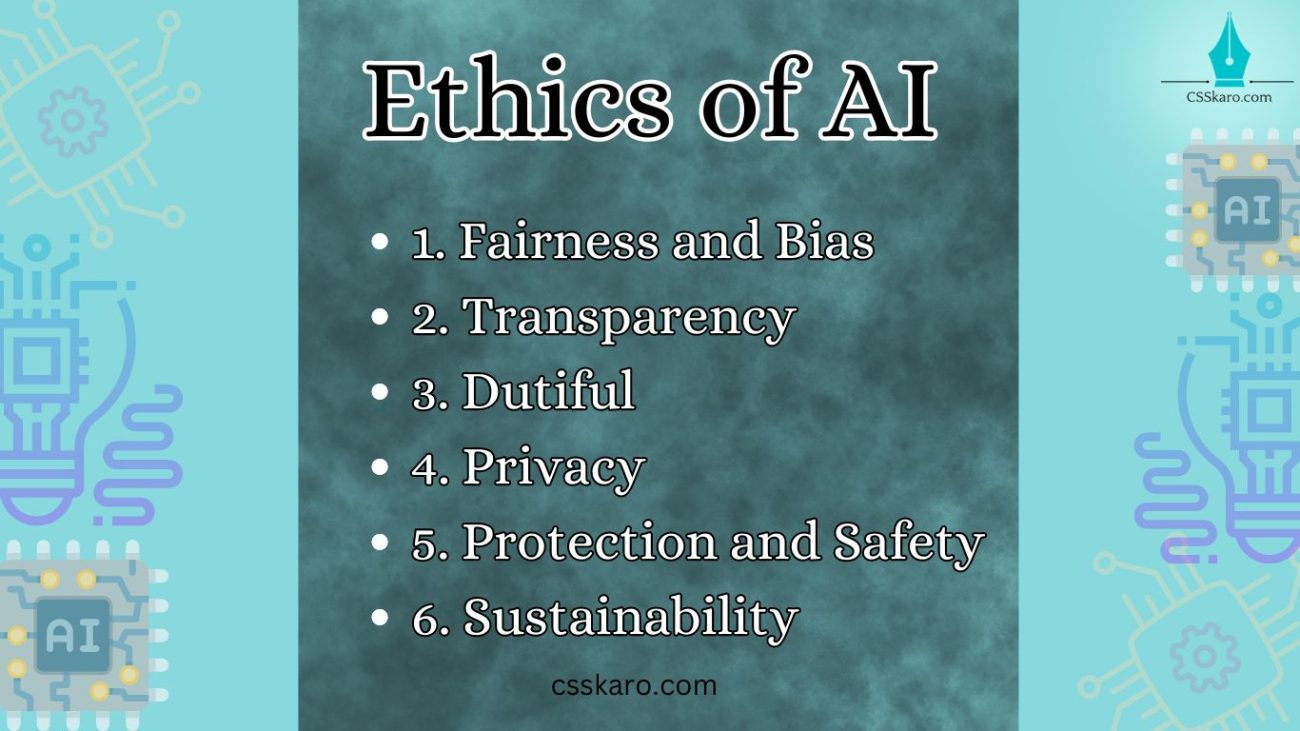
AI ethics refers to the set of standards and tips that govern the accountable improvement and use of synthetic intelligence. right here are some key components:
1. Fairness and Bias
AI structures can inadvertently perpetuate biases found in their training records. ensuring fairness entails actively working to become aware of and mitigate these biases to save you discrimination against marginalized corporations.
2. Transparency
It’s critical for AI systems to be obvious about how they make selections. This consists of providing explanations for his or her outputs, which allows build trust among customers.
3. Dutiful
builders and organizations should be accountable for the effects of their AI structures. this indicates organising clear lines of duty for any damage resulting from AI decisions.
4. privacy
AI often is predicated on huge datasets, that can encompass personal facts. moral AI practices prioritize user privacy and information safety, ensuring that people’ rights are reputable.
5. protection and safety
AI structures need to be designed to be secure and comfortable, minimizing risks of misuse or unintended results. This includes sturdy checking out and validation strategies.
6. Sustainability
thinking about the environmental impact of AI technologies is increasingly essential. moral AI improvement seeks to reduce electricity consumption and promote sustainable practices. organizations like UNESCO and numerous tech groups are actively working to set up frameworks and hints to address these moral worries.